What is the maximum jump height with a jump cue? This is a question that intrigues many pool enthusiasts and players alike. As a jump cue supplier, I've delved deep into the science and practicalities behind this query. In this blog, we'll explore the factors influencing jump height, the types of jump cues available, and how to optimize your jump shots.
Understanding the Basics of Jumping in Pool
Jumping in pool is a skill that requires a combination of technique, equipment, and practice. When using a jump cue, the goal is to strike the cue ball in such a way that it leaves the table surface and clears an obstacle, such as another ball. The maximum jump height depends on several factors, including the force applied, the angle of the cue, and the characteristics of the jump cue itself.
Factors Affecting Jump Height
Force
The amount of force you apply to the cue ball is a crucial factor in determining jump height. A stronger strike generally results in a higher jump. However, it's important to find the right balance, as too much force can cause the cue ball to lose control or even fly off the table. Practice is key to developing the right amount of force for consistent jumps.
Angle of the Cue
The angle at which you hold the jump cue also plays a significant role. A steeper angle will typically result in a higher jump, but it can also be more difficult to control. Experiment with different angles to find the one that works best for you.
Cue Characteristics
The type of jump cue you use can have a major impact on jump height. Different cues have different weights, flexibilities, and tip materials, all of which can affect how the cue ball behaves. For example, a lighter cue may be easier to control, while a heavier cue can generate more power.
Types of Jump Cues
Jump Stick Pool
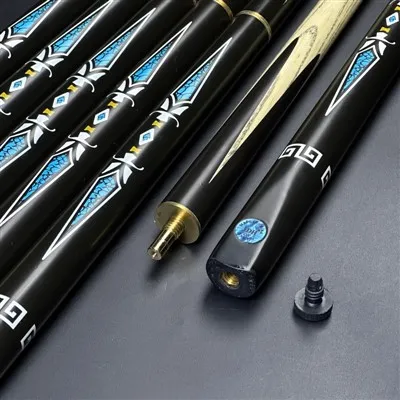
The Jump Stick Pool is a popular choice among pool players. It is designed specifically for jumping, with a lightweight construction and a small tip. This type of cue allows for precise control and can help you achieve higher jumps.
Carbon Fiber Jump Break Cue
The Carbon Fiber Jump Break Cue is another option. Carbon fiber is known for its strength and flexibility, which can translate into more power and better control. This cue is often used by professional players who require high-performance equipment.
1/2 Break Cue
The 1/2 Break Cue is a versatile cue that can be used for both breaking and jumping. It has a larger tip than a traditional jump cue, which can provide more power and accuracy. This type of cue is a good choice for players who want a single cue that can handle multiple tasks.
Optimizing Your Jump Shots
Practice
As with any skill in pool, practice is essential for improving your jump shots. Set aside time to practice different jump techniques and experiment with different cues. The more you practice, the more comfortable you'll become with the process and the better your results will be.
Technique
Proper technique is crucial for achieving maximum jump height. Start by positioning the cue ball close to the edge of the table and the object ball. Hold the jump cue at a steep angle and strike the cue ball with a quick, downward motion. Make sure to follow through with your stroke to generate maximum power.
Equipment Selection
Choosing the right jump cue is also important. Consider your skill level, playing style, and budget when selecting a cue. If you're a beginner, a lighter and more forgiving cue may be a good choice. As you gain more experience, you can upgrade to a higher-performance cue.
The Maximum Jump Height
So, what is the maximum jump height with a jump cue? While there is no definitive answer, it's generally accepted that a well-executed jump shot can clear a ball that is several inches high. However, achieving this requires a combination of skill, technique, and the right equipment.
In a controlled environment, with the right conditions and a skilled player, it's possible to achieve jumps of up to 6 inches or more. However, in a real-world setting, factors such as table conditions, ball placement, and the player's skill level can all affect the maximum jump height.


Conclusion
In conclusion, the maximum jump height with a jump cue depends on a variety of factors, including force, angle, and cue characteristics. By understanding these factors and practicing your jump shots, you can improve your skills and achieve higher jumps. As a jump cue supplier, we offer a wide range of high-quality jump cues to suit every player's needs. Whether you're a beginner or a professional, we have the right cue for you.
If you're interested in learning more about our jump cues or have any questions, please don't hesitate to contact us. We're here to help you find the perfect cue for your game and take your pool skills to the next level.