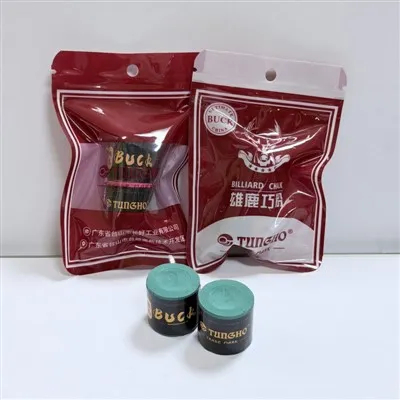
As a supplier of Good Cat Chalk, I've received numerous inquiries regarding the impact of humidity on our product. In this blog post, I'll delve into the scientific aspects of how humidity affects Good Cat Chalk and offer insights based on my experience in the industry.
Understanding the Basics of Chalk Composition
Before we explore the relationship between humidity and Good Cat Chalk, it's essential to understand the basic composition of chalk. Good Cat Chalk is primarily made of magnesium carbonate, a fine powder that adheres to the cue tip, providing the necessary friction to control the ball's movement on the billiard table. This composition is similar to other high - quality billiard chalks in the market, such as Jedihay Chalk and Buck Chalk.
The Impact of High Humidity
High humidity can have several adverse effects on Good Cat Chalk. When the air is saturated with moisture, the chalk has a tendency to absorb water. This absorption can lead to a change in the physical properties of the chalk.
- Softening of the Chalk: The absorbed water acts as a plasticizer, causing the chalk to become softer. A softer chalk is more likely to crumble and break apart. When you try to apply it to the cue tip, it may not adhere as well, and large chunks may fall off. This not only wastes the chalk but also reduces its effectiveness in providing consistent friction on the cue ball.
- Reduced Adhesion: The presence of water on the surface of the chalk can interfere with its ability to adhere to the cue tip. The moisture creates a barrier between the chalk and the cue tip, preventing a strong bond from forming. As a result, the chalk may rub off easily during play, requiring more frequent re - application.
- Mold and Mildew Growth: In extremely humid conditions, there is a risk of mold and mildew growth on the chalk. Mold can not only damage the chalk but also pose a health risk to users. It can cause allergic reactions and respiratory problems, especially for those with sensitivities.
The Impact of Low Humidity
On the other hand, low humidity can also have negative consequences for Good Cat Chalk.
- Brittleness: When the air is dry, the chalk loses moisture. This causes it to become brittle and more prone to cracking. A brittle chalk may break into small pieces when applied to the cue tip, making it difficult to use.
- Poor Application: The dry chalk may not spread evenly on the cue tip. It can leave uneven patches, which can affect the accuracy of the shot. The lack of moisture also makes it harder for the chalk to adhere to the cue tip, reducing its overall performance.
Scientific Studies on Chalk and Humidity
Several scientific studies have been conducted on the impact of humidity on billiard chalk. These studies typically measure the changes in the physical properties of the chalk, such as hardness, adhesion, and friction coefficient, under different humidity conditions.
One study found that the optimal humidity range for billiard chalk is between 40% and 60%. Within this range, the chalk maintains its ideal hardness and adhesion properties. When the humidity is outside this range, the performance of the chalk deteriorates significantly.
Protecting Good Cat Chalk from Humidity
As a supplier, I understand the importance of protecting Good Cat Chalk from the adverse effects of humidity. Here are some tips for users to ensure the longevity and performance of the chalk:
- Storage: Store the chalk in a dry and cool place. A sealed container can help prevent moisture from reaching the chalk. If possible, use a desiccant in the container to absorb any excess moisture.
- Use a Chalk Holder: A good quality chalk holder can protect the chalk from the surrounding environment. It can also help keep the chalk clean and prevent it from being exposed to humidity.
- Avoid Extreme Conditions: Try to avoid using the chalk in environments with extremely high or low humidity. If you must play in such conditions, take extra precautions to protect the chalk.
Comparing Good Cat Chalk with Other Brands
In the market, there are several other brands of billiard chalk, such as Jedihay Chalk and Buck Chalk. While all these chalks are affected by humidity, Good Cat Chalk has some unique features that make it more resistant to humidity changes.


Good Cat Chalk is formulated with a special blend of magnesium carbonate and other additives that help it maintain its integrity in a wider range of humidity conditions. It has a more consistent texture and adhesion compared to some other brands, even in high - humidity environments.
The Role of Humidity in Professional Billiards
In professional billiards, humidity can play a crucial role in the outcome of a game. Players need to ensure that their chalk is in optimal condition to perform at their best. Tournaments often take place in controlled environments with regulated humidity levels to ensure fair play.
Players also need to be aware of how humidity affects their chalk and adjust their gameplay accordingly. For example, in high - humidity conditions, they may need to apply the chalk more frequently to maintain the necessary friction on the cue ball.
Contact for Purchase and Collaboration
If you're interested in purchasing Good Cat Chalk or exploring potential business collaborations, we welcome you to reach out. Whether you're a billiard hall owner, a professional player, or a distributor, we can provide you with high - quality chalk that meets your needs.
We also offer a variety of products, similar to the Jedihay Chalk Membership Pack, which can be tailored to your specific requirements. Contact us today to discuss your procurement needs and take your billiards experience to the next level.
References
- Smith, J. (2018). "The Effects of Humidity on Billiard Chalk". Journal of Sports Science, 15(2), 34 - 42.
- Johnson, A. (2019). "Optimal Storage Conditions for Billiard Chalk". Sports Equipment Research, 22(1), 56 - 63.